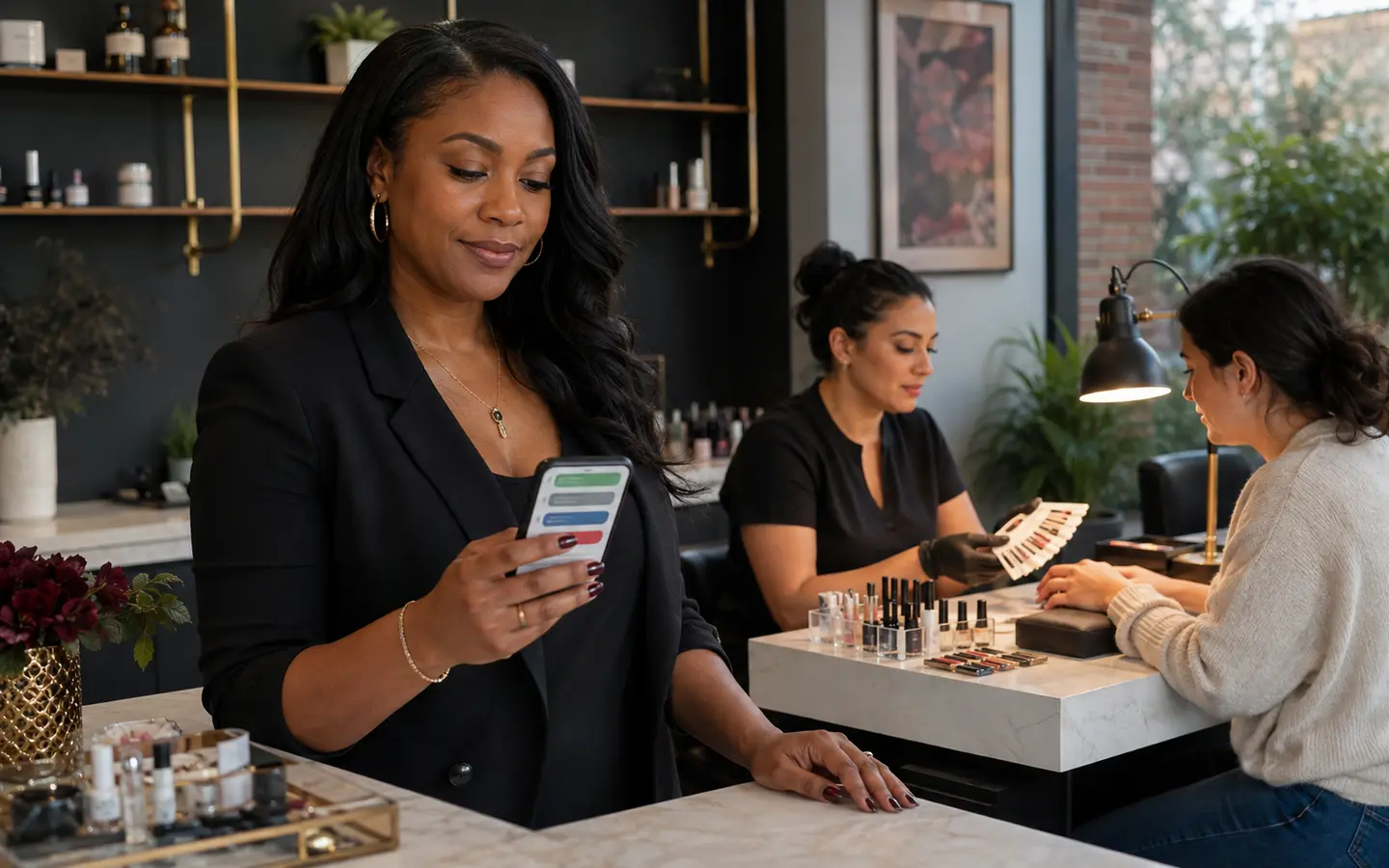
How an AI receptionist works alongside a human receptionist
A practical operating model for using AI on repetitive calls and messages while a human team handles judgement, care and exceptions.
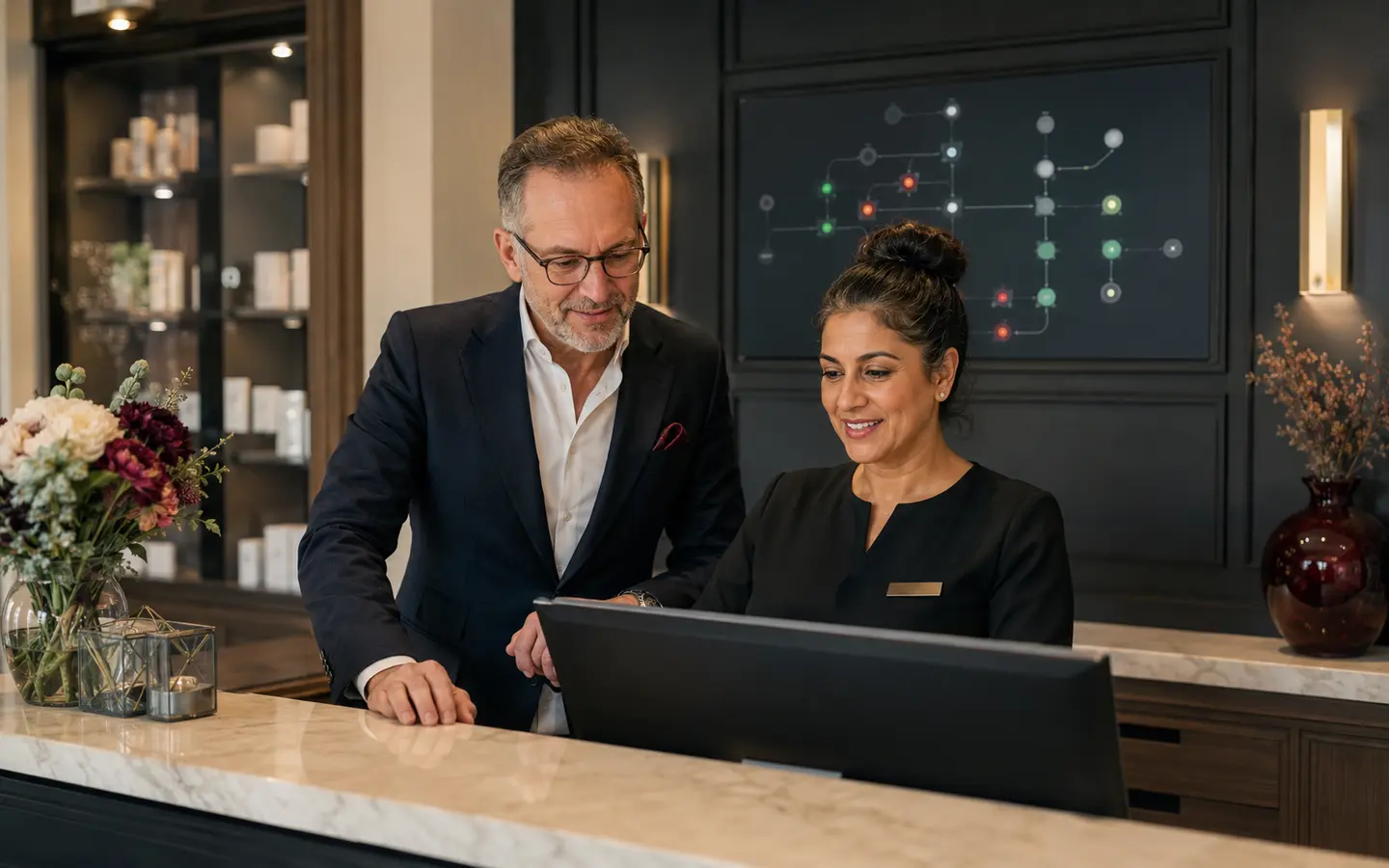 In this guide3 operating decisions3 practical questions answered
The strongest model is rarely human or AI. It is a clear division of responsibility that gives repetitive work to the Agent and preserves human attention for conversations where judgement, empathy or commercial skill creates more value.
This guide turns the subject into an operating decision for salons, clinics, beauty businesses and service teams considering voice AI, conversational AI or an AI receptionist. The aim is to make the responsibility, boundary, next action and measure of success clear before implementation begins.
Give the Agent high volume, repeatable work
Service questions, opening hours, availability checks, appointment changes, reminders and approved follow ups are common starting points. These journeys benefit from speed and consistency.
The receptionist gains time for clients in front of them, sensitive calls, unusual requests and the work that cannot be reduced to a rule.
Design a handoff that carries context
A poor handoff simply tells the client to call again. A useful handoff records what the client asked, what information was collected, what the Agent already explained and what the person needs to decide.
Clear ownership matters. The system should route by location, service, urgency or team responsibility rather than dropping every exception into the same inbox.
Use reporting to improve the division of work
Conversation outcomes show which questions repeat, where clients abandon and where the Agent needs better knowledge or a safer boundary.
The team can then adjust scripts, rules, ownership and training based on real demand instead of guessing which automation would help.
Clear answers to the practical questions.
01Is the goal to remove reception staff?+
No. The goal is to give people more capacity for valuable human work and cover demand that currently waits or goes unanswered.
02Who decides when a human takes over?+
Escalation topics, urgency, sentiment, service rules and client status are agreed during design and testing.
03Can the receptionist see what the Agent said?+
A connected client history can keep the conversation, outcome and next action visible to the team.